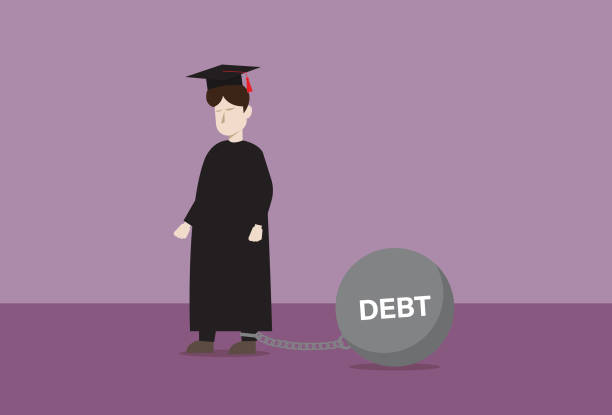
A student loan is not just a lump sum you pay back later. It is a contract with a clock attached. That clock starts ticking when money is disbursed, even if you are still in school and not required to make payments. The number that clock controls is interest. Interest is why two people can borrow the same amount and pay wildly different totals. Understanding it is not optional if you want to keep your head above water after graduation.
Interest is the fee a lender charges for borrowing money. With most student loans, it is calculated as a percentage of your outstanding principal balance. Principal is the original amount you borrowed, plus any interest added through capitalization. If you borrow $20,000 at 6 percent, that does not mean you owe $1,200 once. It means interest accrues over time, usually daily. The daily rate is your annual rate divided by 365. On $20,000 at 6 percent, that is about $3.29 per day, or roughly $100 per month. If you are not paying that interest while in school, it waits.
Federal Direct Subsidized Loans are friendlier. The government pays the interest while you are in school at least half-time, during the six-month grace period, and during authorized deferment. Direct Unsubsidized Loans do not have that benefit. Interest starts accruing from the day the loan is disbursed. You can pay it while in school to keep your balance down, but many students do not. That is how a $20,000 loan becomes $23,000 or more before repayment even begins.
Private student loans work differently. Banks, credit unions, and online lenders make them. Their interest rates depend on your credit score, income, cosigner, and the lender’s mood. Some offer fixed rates; others offer variable rates that can rise over time. A variable rate might look cheaper at signing and then jump two years later. Private loans also have fewer safety nets. They usually do not offer income-driven repayment, Public Service Loan Forgiveness, or long deferment options. If you are choosing between federal and private loans, exhaust federal aid first. It is not glamorous advice, but it keeps you out of a courtroom.
The servicer is the company that handles your loan after disbursement. It sends bills, processes payments, and answers questions, though answers is sometimes generous. Your servicer can change, and your loan can be sold, but the terms do not. You still owe what you signed for. That is why you need to read your Master Promissory Note. It is the legal contract you sign. It spells out the interest rate, fees, capitalization rules, grace period, and repayment options. It is boring. Read it anyway. The details are the difference between a manageable payment and a financial ambush.
Capitalization is the quiet killer. This happens when unpaid interest is added to your principal balance. After that, you pay interest on interest. If you let $2,000 of interest accrue and your loan capitalizes, your new principal is $22,000 on a $20,000 loan. Now your daily interest is calculated on the larger number. This often happens when you enter repayment after grace, leave an income-driven plan, or exit forbearance. You can avoid some of it by paying interest while in school or during grace, even small amounts. Ten dollars a month will not erase the problem, but it can slow the bleeding.
When it is time to repay, federal borrowers choose a plan. The standard plan spreads payments over ten years and usually costs less total interest but has higher monthly payments. Income-driven repayment stretches payments over twenty or twenty-five years and caps them at a percentage of your discretionary income. That can make payments affordable, but you may pay more interest over time. There is no perfect plan. There is only the plan that fits your income, goals, and tolerance for risk.
The practical move is simple. Know your interest rates. Know whether your loans are subsidized or unsubsidized, federal or private. Pay interest when you can. Pay more than the minimum when you can. Never ignore a servicer letter, because default is much more expensive than confusion. A student loan is a tool with teeth. Learn how it works before it takes a bite out of your future.