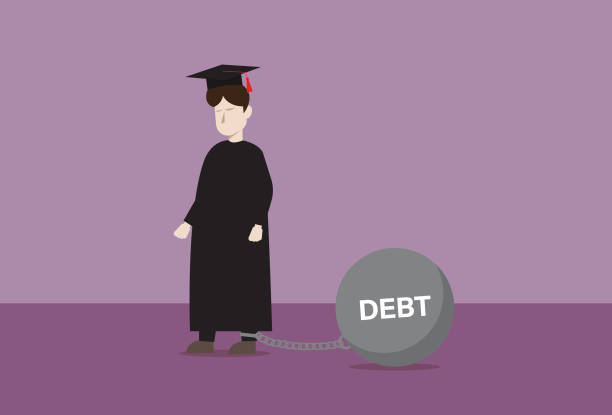
If you graduated with a stack of federal student loans, you might be staring at four, six, or even ten different payments every month. A Direct Consolidation Loan can turn those separate federal loans into one loan with one servicer and one monthly bill. But consolidation is not automatically a money-saving move. It is a management move. Sometimes it unlocks better repayment plans. Sometimes it just stretches your debt out and costs more interest.
Federal consolidation works by paying off the eligible federal loans you choose and replacing them with a new Direct Consolidation Loan. Your new interest rate is not a special low rate. It is the weighted average of the rates on the loans you consolidate, rounded up to the nearest eighth of a percent. You are not getting a discount. You are getting simplicity. It matters less if you have one loan or you are months away from paying everything off.
The biggest reason to consider consolidation is access to income-driven repayment. If you have older federal loans, like FFEL loans, they may not qualify for the best income-driven plans on their own. A Direct Consolidation Loan can make them eligible. That can lower your monthly payment based on your income and family size. If you are chasing Public Service Loan Forgiveness, consolidation can also be necessary to turn certain loans into Direct Loans that qualify. But here is the no-nonsense warning: consolidation can affect your payment counts. If you are already on track for forgiveness, do not consolidate blindly. Check your loan types, your payment history, and the current rules before you click submit. A lower payment today is not worth losing years of progress toward forgiveness tomorrow.
Another benefit is escaping default. If your federal loans are in default, consolidation can help you get back into good standing, but you usually have to make three consecutive voluntary payments first or agree to an income-driven repayment plan. Once you consolidate, you can then qualify for programs that were locked away. That can be a lifeline. Just do not pay a third-party company to do this for you. You can apply for a Direct Consolidation Loan for free through the federal student aid website. Anyone asking for a fee to consolidate federal loans is taking money you could be using to pay down the actual debt.
Consolidation also has real trade-offs. You may lose your grace period if you consolidate during it. You may lose borrower benefits tied to individual loans, like interest rate discounts or cancellation perks. If you extend your repayment term to lower the monthly payment, you will pay more interest over time. And if you include all your loans, you cannot pick and choose which ones get the better treatment later. You can often choose which loans to include, so leave out any loan that has a benefit you do not want to lose. Do not consolidate private loans with federal loans. Private loans are not eligible for federal consolidation, and mixing them through a private refinance would strip away federal protections like income-driven repayment, deferment, and forgiveness. That is a hard no for most people.
So should you consolidate? Run the math and ask what problem you are solving. If your problem is confusion, multiple payments, or loans that are not eligible for the repayment plan you need, consolidation is worth a serious look. If your problem is that you want a lower interest rate, consolidation will not do that. If your problem is that you are close to forgiveness or close to payoff, consolidation may hurt you. Start by logging into your federal student aid account and listing every loan, its servicer, its balance, its interest rate, and whether it is a Direct Loan. Then use the federal loan simulator. Compare your current payment under your current plan with what you would pay after consolidation. Call your servicer if you are unsure. This is your money and your future. One payment can be a blessing. It can also be a trap. Know the difference before you sign up.